How to Reply to a Section 142(1) Notice
A notice under section 142(1) asks the taxpayer to file a return, produce accounts or documents, or answer specific questions before the Assessing Officer completes an assessment. The reply is due on the date written in the notice, through e-Proceedings on the e-filing portal; missing it can cost a ₹10,000 penalty for each default and a best judgment assessment.
What a 142(1) notice asks for
Section 142(1) lets the Assessing Officer, for the purpose of making an assessment, serve a notice on anyone who has filed a return, or whose time to file under section 139(1) has expired. The notice can require one or more of three things, each on a date the notice specifies:
| Clause | What the taxpayer must do | Limit in the Act |
|---|---|---|
| 142(1)(i) | File a return of income, where none was filed within the time under section 139(1) or before the end of the relevant assessment year. | Return in the prescribed form, verified as prescribed. |
| 142(1)(ii) | Produce, or cause to be produced, the accounts or documents the Assessing Officer requires. | No accounts for a period more than three years before the previous year. |
| 142(1)(iii) | Furnish information in writing, in the form and on the points the Assessing Officer requires, including a statement of all assets and liabilities. | A statement of assets and liabilities not included in the accounts needs the Joint Commissioner's prior approval. |
A related provision, section 142(2A), lets the Assessing Officer direct a special audit of the accounts. That is a direction, not a 142(1) notice, and has its own consequences.
Why it is issued
In practice a 142(1) notice usually arrives for one of these reasons:
- No return filed. The department holds information (TDS, high-value transactions, the Annual Information Statement) for a year in which no return was filed. The notice is under clause (i).
- Scrutiny in progress. After a scrutiny notice under section 143(2), questionnaires calling for documents and explanations are commonly issued under section 142(1).
- Specific mismatches. Income in the return differs from what third parties reported, a large deduction or exemption needs support, or cash deposits, loans or investments need explaining.
How to read the notice
Before writing anything, pull these facts out of the notice. They go into the subject line of your reply and decide what you must answer.
- DIN (Document Identification Number). CBDT Circular No. 19/2019 requires every notice to carry one; a communication without a DIN is treated as invalid. Confirm it with Authenticate notice/order issued by ITD on the e-filing portal.
- Assessment year and the section under which it is issued. Check the clause: (i), (ii) or (iii).
- Response due date. This is the only deadline that matters for the reply. Note it the day the notice arrives.
- Every query or document asked for. Number them in the order the notice lists them. Your reply answers each one under the same number.
- The issuing authority: a faceless assessment unit or a jurisdictional Assessing Officer. It decides how hearings are requested.
How to reply on the e-filing portal
- Log in to the e-filing portal (incometax.gov.in) with the taxpayer's credentials.
- Open Pending Actions → e-Proceedings and select the proceeding for the assessment year in the notice.
- Open the notice and choose Submit Response. If you answer only some queries now, submit a partial response and complete it before the due date.
- Type a short covering reply and attach the detailed reply and documents as PDFs. Keep each attachment within the size the upload screen allows, and name files after the query they answer (for example Q3_bank_statement_HDFC.pdf).
- Submit, then download the acknowledgement and keep it with the file.
- If you need more time, request an adjournment through e-Proceedings before the due date, with reasons and the date by which you will reply.
For clause (i) notices, the response is the return itself: file the return of income for that assessment year in response to the notice, and attach any explanation the notice asks for.
How to structure the reply
A reply the Assessing Officer can follow query by query is the best protection against an adverse order. This skeleton works for most 142(1) notices:
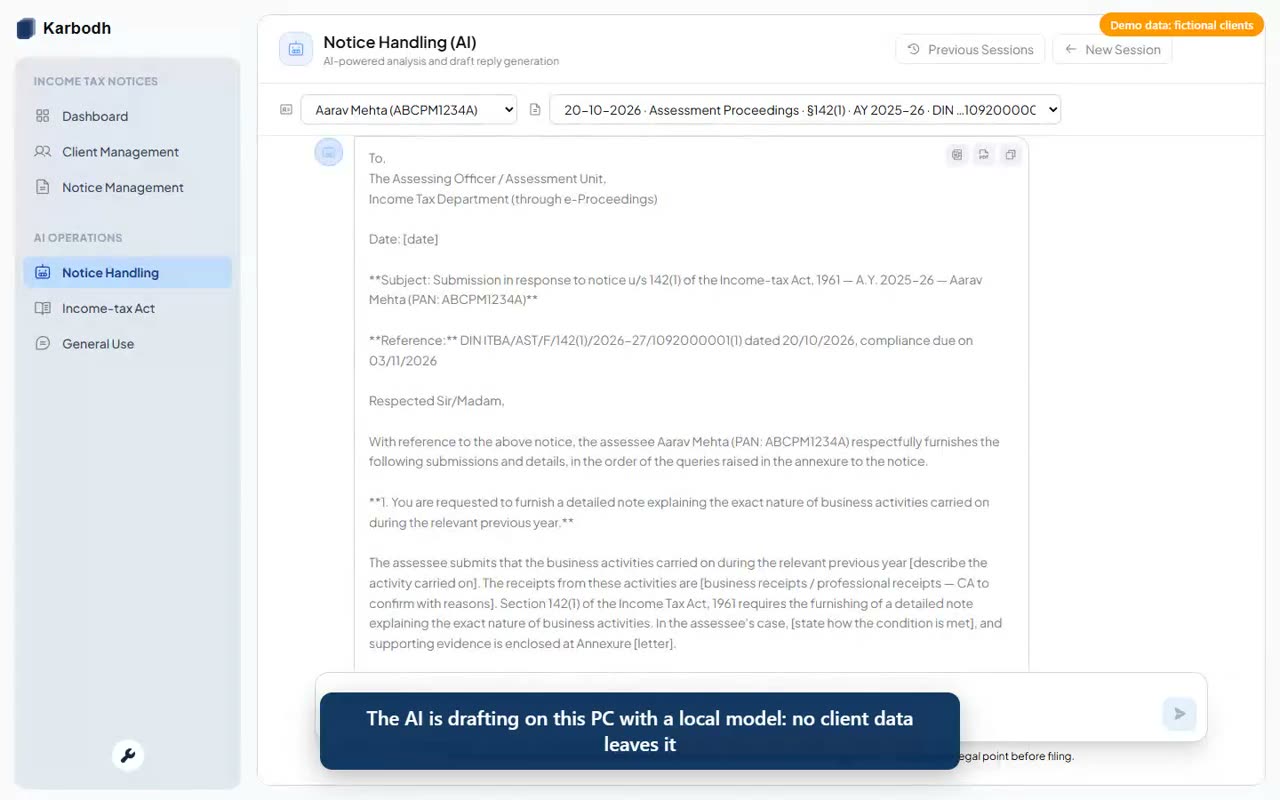
To the Assessing Officer / faceless unit · Subject: Reply to notice u/s 142(1), A.Y. ____, DIN ____ dated ____ · Assessee: name, PAN
- Facts. Who the assessee is, the return filed (date, income returned), and the notice being answered.
- Query-wise response. Repeat each query in brief, then the answer, with a reference to the supporting document.
- Documents enclosed. An index of every attachment, numbered to match the queries.
- Prayer. That the reply and documents be taken on record, the returned income be accepted, and an opportunity of being heard be given before any adverse view.
Signed by the assessee or the authorised representative, with date.
Mistakes that lead to an adverse order
- Missing the date without asking for time. Under section 272A(1)(d) the penalty is ₹10,000 for each default, and section 144(1)(b) allows a best judgment assessment when a 142(1) notice is not complied with.
- Answering some queries and silently skipping others. Every query needs a response, even if it is "not applicable" with a reason.
- Attachments that do not match the queries, or bank statements and ledgers without the entries in question marked.
- Explanations that contradict the return or the documents filed earlier in the same proceeding.
- No acknowledgement kept, so there is no proof of what was filed and when.
Wilful failure to produce the accounts and documents called for under section 142(1) is also an offence under section 276D, punishable with rigorous imprisonment of up to one year and fine.
Draft it in Karbodh
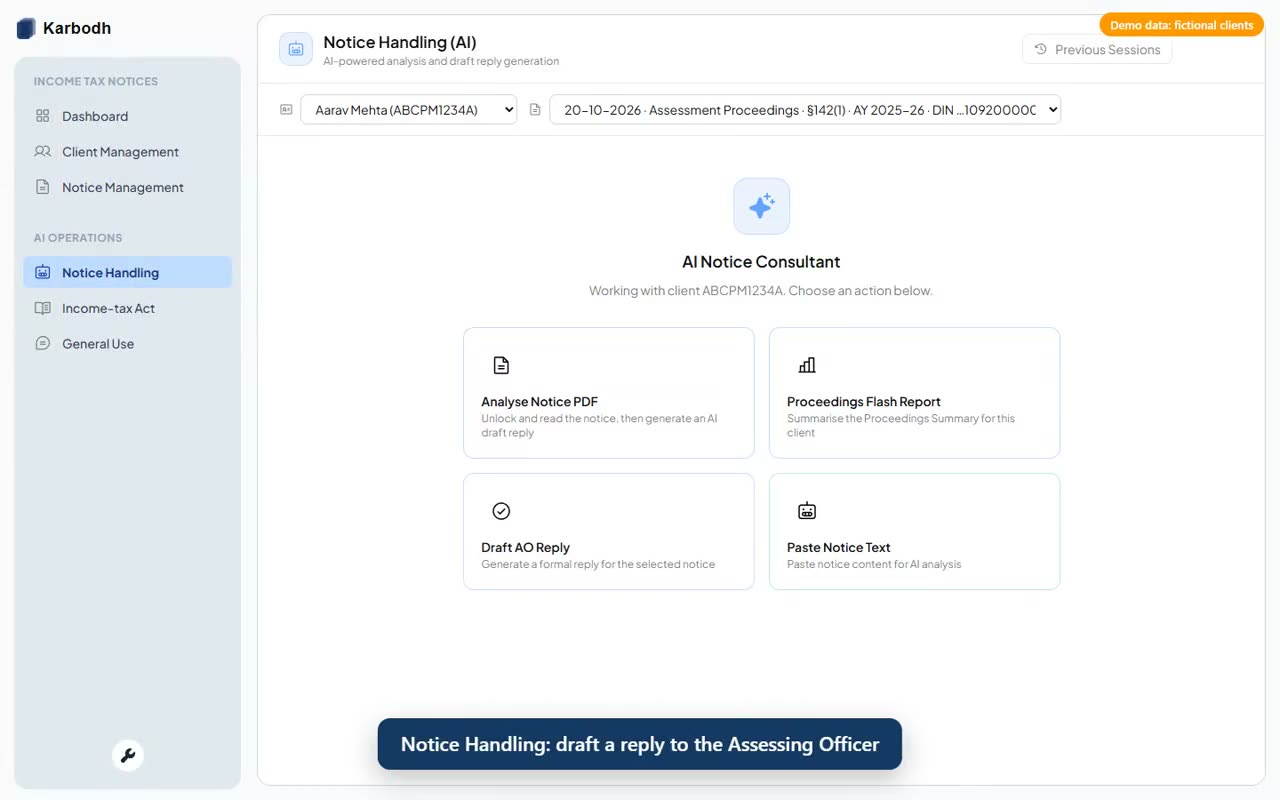
Karbodh is a tool for CAs and tax practitioners that does the routine part of this work on your own computer. It downloads the notice from the portal during Portal Sync, takes the DIN, assessment year, section, due date and every query from the notice text, and prepares a query-wise draft in the structure above. Facts come from the notice; AI suggestions are marked for you to check. You review it, finish it and file it.
Let Karbodh draft your next notice reply. Portal sync, every due date on one screen, and query-wise drafts on your own PC. Free for 3 days.
Start the free trialFrequently asked questions
What is the time limit to reply to a notice under section 142(1)?
The reply is due on the date specified in the notice itself; the Act does not fix a standard number of days. If you need more time, ask for an adjournment through e-Proceedings before the due date and give reasons.
What happens if I do not reply to a 142(1) notice?
Under the 1961 Act, failure to comply attracts a penalty of Rs 10,000 for each default under section 272A(1)(d), and the Assessing Officer may make a best judgment assessment under section 144(1)(b). Wilful failure to produce the accounts and documents called for is punishable under section 276D with rigorous imprisonment of up to one year and fine.
Can the Assessing Officer ask for accounts of any number of years?
No. Section 142(1) does not allow the Assessing Officer to require accounts relating to a period more than three years before the previous year, and a statement of assets and liabilities not included in the accounts needs the prior approval of the Joint Commissioner.
Is a 142(1) notice without a DIN valid?
CBDT Circular No. 19/2019 requires every notice to carry a Document Identification Number; a communication without one is treated as invalid. You can confirm a notice on the e-filing portal with 'Authenticate notice/order issued by ITD'.
What is the section under the Income-tax Act, 2025?
Section 268(1) of the Income-tax Act, 2025. It applies to tax years beginning on or after 1 April 2026; notices for earlier years continue under section 142(1) of the 1961 Act (section 536(2)(c) of the 2025 Act).
More guides
- Income-tax Act 1961 vs 2025: Section Mapping for CAs
- 143(2) Scrutiny Notice: Reply Format and Checklist (coming soon)
- Section 148A Notice: How to Reply Before Reassessment (coming soon)
- Defective Return Notice u/s 139(9): How to Respond (coming soon)
Section numbers and limits on this page are from the bare Acts published on incometaxindia.gov.in. Check the notice itself and current CBDT instructions before relying on them. See the Karbodh user manual or the five-step tour.